
A Journey of Service, Culture, and Yoga Across Continents
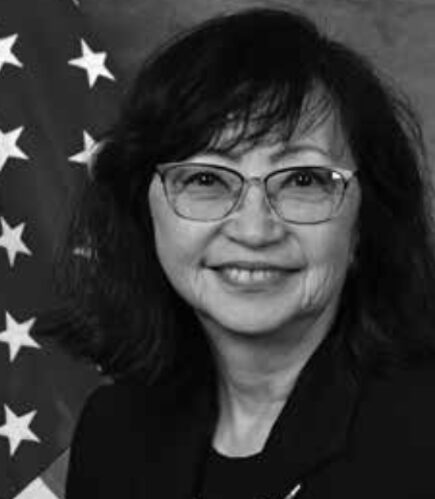
Chuna Grace Rai-Nelson, Arkansas, America
UKROA, Ad hoc committee president
I am Chuna Grace Rai, became Rai-Nelson after marrying a Nelson. Being a daughter of a British Army Officer I learnt discipline. After he retired, my father Late Ganga B Rai (Ruchhenbung) from Bhojpur did lots of social service—supporting ex-British army families, establishing and constructing schools in the village. He was affiliated with an ex-army organization and later worked as a welfare officer in Bhojpur.
I learnt to do volunteer service without expecting anything in return (karma as Bhagavad Gita). My mother taught me to be a real yogi. Yoga is not only physical exercise but starts from Yama and Niyama. Which education starts from home. We had to teach at the village school during summer vacation—mandatory from my dad.
At nineteen I served as the first Principal of the School for the Blind in Dharan, running the whole administration. I gained lots of knowledge by many mistakes—just like walking with a blindfold on a gravelled road. When I memorized a few events, they gave me courage to keep going.
Almost four decades ago I came to the USA for higher study, starting a PhD in Psychology. After a few years the money ran out. Three children were left behind in a hostel in Nepal. I got lots of stressful situations. I started to think I should stay here and work on building a new life so my children could come to the USA. I diverted my life from student to worker in a nursing home!
My American life started in California in the early 90s. After a while I felt odd not meeting Nepalese people, not talking my own language. I tried to look for a Nepalese community. It was very difficult to find people from Nepal at that time. First difficulty: there was no computer, no cell phone, no online media. Even if we had a black rotary phone, we had to pay extra to dial into a different area code. Out-of-state calls were a huge deal. Calling Nepal cost $3.50 per minute from a public phone. If I talk about it these days, it seems I am an ancient animal!
In 1992 I moved to Colorado. I had flown from Nepal. I found some other Nepalese people who were very supportive, like family. I felt very happy. In 1995 I participated in the ANA (Association of Nepalese in America) convention—the first non-profit organization of the Nepalese community in the USA. I also performed a Nepalese dance, which made me so proud to be Nepalese!
Life was doing well. Everyday work, training, self-studies, etc. were going on. I was working at a bank. Started to meet more people from Nepal. We had one Rai family (late Vim Rai) whom I respected as my own brother in Boulder, Colorado.
Nepalese people needed a person for interpreting in immigration, court, and many other offices. People asked me to help. I started doing my social service, helping many new people. I also taught ESL (English as a Second Language) in the Presbyterian church where I was a member.
After the People’s War (1996) in Nepal, the Nepalese community started to grow in the US. I was working in Immigration as an interpreter as my second job. I individually supported over 200 people in asylum cases and travelled all over the United States.
I met a few from the Kirat Rai community. We started to talk about forming a Kirat organization in 2003. Shiv Kumar Rai’s article explains all about it. This way, the Kirat Rai Society of America (KRSA) officially started in 2004. I was a board member and appointed as a registered agent in Nebraska. As a business banker, I knew formation of organizations and types of business. I volunteered for registration and started to communicate with the IRS for non-profit charity status. It took several nights and days of back-and-forth communication.
Later I became the official President of KRSA. When any activities go well, people start to bring arguments—that is the culture of human beings. Being a yogi, my philosophy is not to hurt and argue but just let go. Many respected Rai brothers threw me bitter, unsalted statements to get rid of me. I just resigned from president, but some of my good-wisher Rai brothers asked me not to do it.
Anyway, I was done with KRSA. My faith is to support anything needed, but I do not want to lead a competitive-minded, egoistic group. I had lots to do in my own life—work, yoga, etc. I was happy to be out from KRSA.
Later Shiva Rai, Dhaura Bir Rai, and Milan Rai called me and asked me to be the starting president of a new organization. We named it United Kirat Rai Organization of America (UKROA) in 2007. The goal of choosing me as the first president was to honor the humiliation that had happened with KRSA. I hesitated to accept, but all brothers enforced me to do so. After that I registered UKROA in Colorado. Started to work with the IRS for charity status. UKROA officially became a non-profit 501(c)(3) organization in 2008. Mr. Dhaula Bir Rai has a very big role in forming this organization. He is a very straightforward person who helped me in many ways to complete this work.
Our small community decided to meet in May 2007; we had our first meeting of UKROA in New York. We all asked Mr. Shiva Rai to become the President of UKROA.
After that many wonderful brothers and sisters were involved in this organization and gave their very important time and input. I am so happy to see this UKROA grow from a small group to a large, energetic organization.
I wanted to bring yoga into this organization because it needs unity, attention, support, egolessness, compassion, friendship to move forward. Our culture is very rich, but being away from our own culture will take away our originality. Our modern Rai society in the United States is changing as our families are being born and raised here. Unity will carry our culture effectively generation to generation in many ways.
I repeat again: yoga is not only an exercise. It helps to find the path of greatness in life. It helps to take away the kleshas in human nature.
Now I work at the US Dept. of Veterans Health Affairs as a Yoga Therapist and yoga teacher trainer nationwide. My goal is to teach how to heal ourselves physically and emotionally. The philosophy of yoga mentions “Vasudeva Kutumbakam”—the world is one family.
Basic Yoga and Our Health
Most people around the world know about yoga these days. The word yoga derives from the Sanskrit word “yuj,” meaning connection (union) in simple language. This is connecting mind, body, and soul. Union of these into the inner self is yog. Approximately 5000 years ago yog started. Historically, living with Yama and Niyama is yoga according to Maharishi Patanjali. In ancient times the aim of practicing yoga was not only to harmonize the body but to attain spiritual growth and emotional stability. Time changed, culture and lifestyle changed. These days yoga is popular as a physical exercise (fitness).
The major reasons for practicing yoga are physical and mental well-being: improved flexibility and strength, reduction of stress, anxiety, and depression, reduction of pain, and enhanced healing process.
Healthy body, healthy mind. It is very important for us. People are dying at a very young age, living with sickness, and taking many medications every day. If we do the right kind of yoga practice every day, it’ll reduce all kinds of physical illnesses, communicable or non-communicable. Some of the diseases that we suffer are due to diet and lifestyle.
Yoga is not just a physical exercise. We can do yogic practice by practicing the eight limbs of yoga which Maharishi Patanjali mentioned in Yoga Sutra Patanjali:
- Yama – Ahimsa, Satya, Asteya, Brahmacharya and Aparigraha
- Niyama – Saucha, Santosha, Tapas, Svadhyaya and Ishvarapranidhana
- Asana – Yoga postures
- Pranayama – Breathing practices
- Pratyahara – Control of senses
- Dharana – Focus
- Dhyana – Meditation
- Samadhi – State of meditative consciousness
According to Swami Svatmarama in Hatha Yoga Pradipika there are four major practices:
- Asana – mentioned 84 yoga poses
- Pranayama & Satkarmas
- Mudra & Bandha
- Meditation & Samadhi
Therapeutic yoga is a deeper study of alternative healing methods and emphasizes preventive care. It is a holistic approach to yoga study where we learn to focus on the gross body, subtle body, and sometimes causal body. This approach connects and balances body and mind, regulates, cultivates, integrates, and coordinates the whole body system.
According to Taittiriya Upanishad, the study of the three bodies and five sheaths (koshas) are very important to attain spiritual growth and emotional balance. Those sheaths are:
- Annamaya kosha – Physical (sthula) body
- Pranamaya kosha – Physical body
- Manomaya kosha – Astral (sukshma) body
- Vigyanamaya kosha – Astral body
- Anandamaya kosha – Causal (karana) body
I am only mentioning basic yoga here, not deeply into the knowledge of yoga. I just wanted to share the introductory education of yoga that I understand after practicing and experimenting for more than four decades of my life.
All yoga practice is accepted around the world. More than 300 million people practice yoga worldwide. About 34.4 million from the USA alone practice yoga as of 2021. In the USA 57.4 % of adults practice yoga meditation. 80 % practice to restore overall health and fitness and 28.8 % practice to manage physical pain.
I teach yoga and train instructors at the US Dept. of Veteran Affairs for several years. In my experience, most veterans or seniors like to practice yoga to relieve pain. Western culture mostly teaches meditation as body scanning. In my opinion, as I studied with my Guruji Dr. Omnad, dynamic meditation and yoga nidra have the very best benefits for our body and mind. It is called BBM—Blissful Body Meditation. People should practice this meditation to relieve stress, anxiety, and depression.
I hear from friends and families around that they have diabetes and high blood pressure—common among our Nepalese community. My suggestion to prevent such health defects is we need to watch what we do and what we eat. Most people have office work and need to sit almost all day. Lack of movement and posture makes our body tired and causes lower-back problems. There are more than 72 % of people with chronic back pain in the USA.
According to the CDC (Center for Disease Control & Prevention), the obesity rate in the USA for over-20-year-old adults was 41.9 %—which means 4 out of 10 adults. Men: 40.4 % and female: 43.4 % obese. Finding the above data, we can try practicing yoga.
In our daily life yoga includes:
- Yoga asana (gentle yoga postures)
- Pranayama – different breathing practices
- Dharana – focus
- Dhyana – meditation
- Mudra – different gestures (for certain time)
- Satkarmas – six kriyas to help cleanse the body
- Mitahara – diet (balanced)
- Dinacharya – daily rituals (several ways to clean in the morning)
- Chanting (singing) to activate and vibrate the nervous system (different chakras)
There are so many yoga instructors. We need to find some guidance to start first, then self-practice at home is very good. When we try to find yoga instructors, we must look for an experienced and knowledgeable yoga instructor. Because these days yoga business in the USA is so popular, they get 200 hours of training—very little knowledge of philosophy, anatomy—and then they start teaching. Sometimes it is dangerous to just go with anyone. 10 % of people are having pain and some kind of physical issues after yoga practices. We have to be very mindful of what we are learning.
At the end my advice to all: please start moving our body simply by doing breathing practice, gentle stretching, being mindful what we eat, cleansing mind and body, chanting (songs/hymns/Om).
Yoga therapy is an alternative integrated therapy for people suffering from physical, emotional, and some kind of injuries. It helps to maintain, balance, and harmonize a healthy body and mind. The holistic method is not only healing but preventing any illness and bringing clarity in mind.
I’d like to advise our Nepalese community to start practicing the eight limbs of yoga where we learn not only physical. We grow spiritually and we can maintain our stressful life better than what we have.
I am always available for more information. Namaskar!









Post Comment