United Kirat Rai Organization of America
Background:
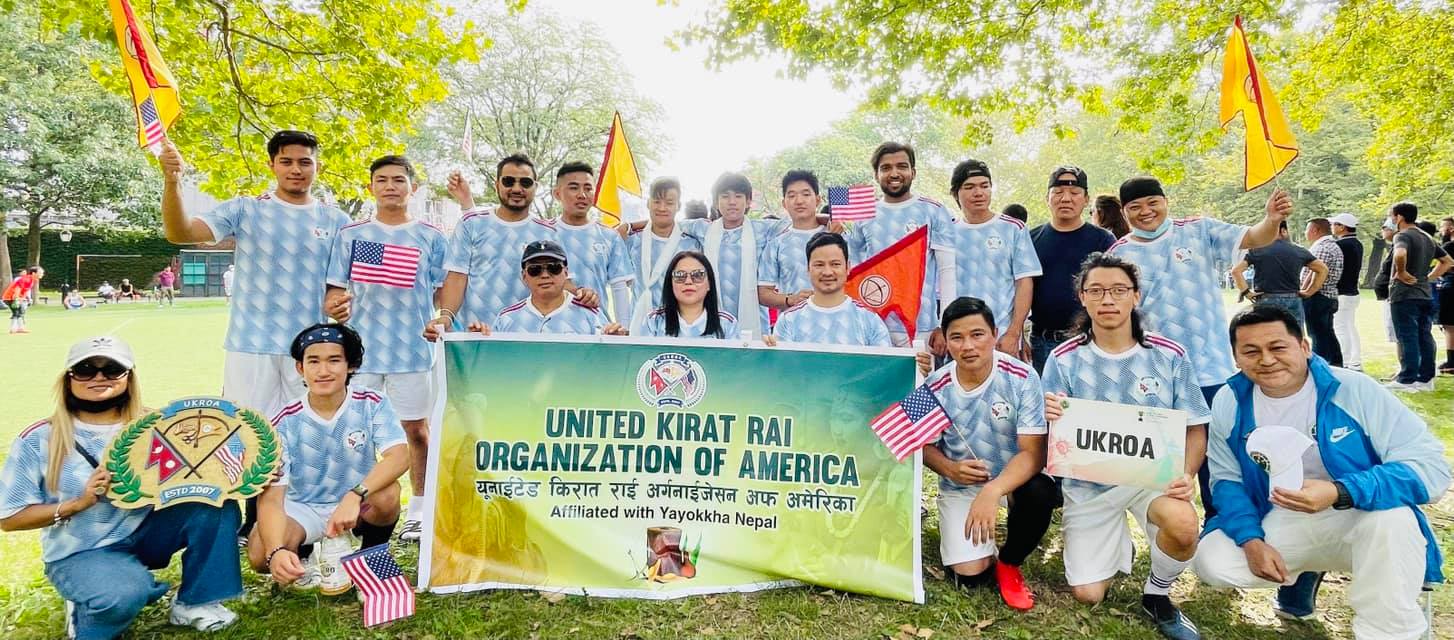
The United Kirat Rai Organization of America (UKROA) is a non-profit social and cultural organization formally established in 2007 under Section 501(c)(3) of the laws of the United States of America. The organization is commonly referred to as UKROA. UKROA maintains a formal affiliation with the Kirat Rai Yayokkha of Nepal and serves as a unified, representative, and inclusive cultural institution for Kirat Rai Nepalese residing in the United States.
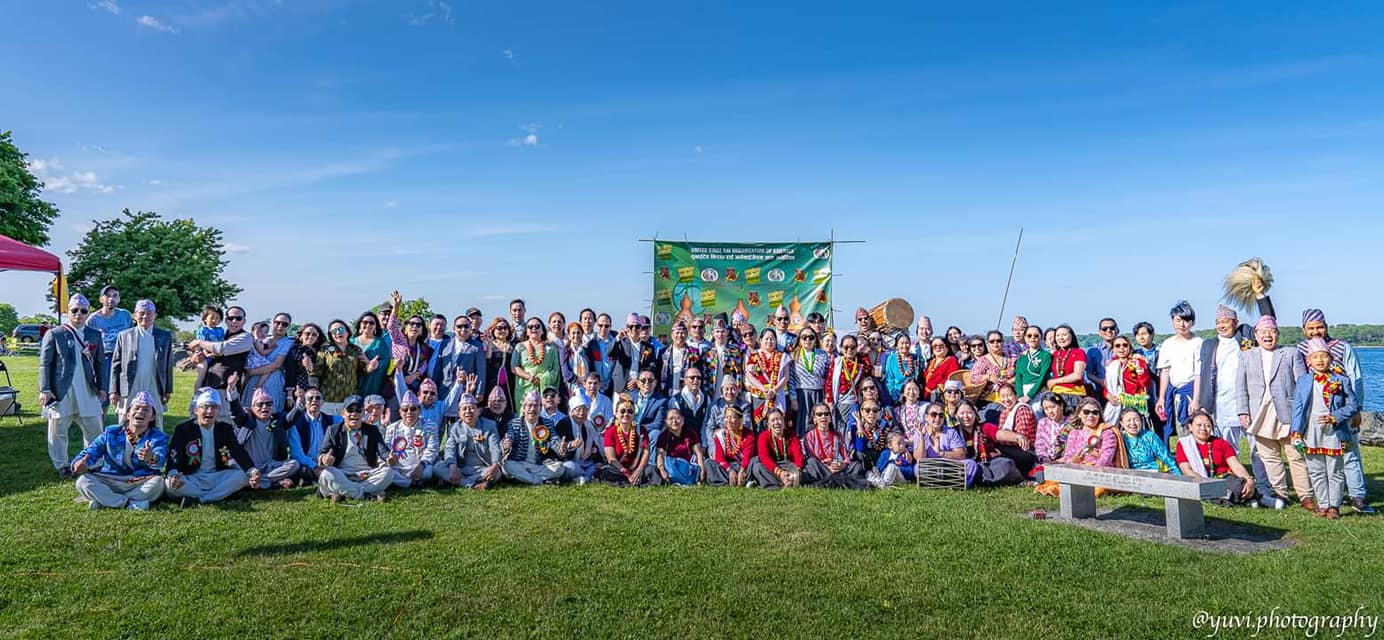
The primary objective of UKROA is to preserve and promote language, script, religion, rituals, and culture among the American and Nepali Kirat Rai communities, while also fostering collective and institutional discourse on the experiences, celebrations, challenges, and achievements encountered during the process of immigration. The organization has adopted a long-term vision of establishing and introducing the social, cultural, and economic status of the Kirat Rai community at both national and international levels.
Among the ancient Indigenous peoples of the nation of Nepal, the Kirat community includes ethnic groups such as Khambu (Rai), Limbu, Yakkha, Sunuwar, Dhimal, and Kochemeche, who are also recognized as the original inhabitants of the land. In the contemporary context, the term “Kirat” is most commonly used to refer to the Rai (Khambu) community. Within the Rai community, there exist 26 distinct linguistic groups. The Rai (Khambu) people who speak these languages are geographically spread from the eastern region of the Dudha Koshi River to the areas surrounding the Arun River.
Today, the Rai community has migrated and settled in various countries across the world, including the United States, the United Kingdom, Hong Kong, Australia, and Darjeeling. Recognizing the necessity of institutionally preserving and promoting their language, culture, and traditional identity within the social and cultural environment of immigration, the Kirat Rai community in the United States established the United Kirat Rai Organization of America (UKROA).
Objectives:
To research, document, preserve, and systematically promote endangered linguistic, cultural, and historical heritages of the Kirat Rai community at national and international levels.
Strategies:
- To carry out scientific and systematic documentation to ensure the preservation, promotion, dignity, and respect of the language, culture, intellectual, and historical heritage of the Kirat Rai community, as well as to organize workshops, seminars, and book publications.
- To conduct public debates and discourse-oriented programs aimed at improving the living standards, social status, educational conditions, historical and cultural awareness, leadership development capacity, and environmental consciousness of the Kirat Rai community.
Action Plans:
UKROA remains committed to the following action plans for the overall welfare of the Kirat Rai community:
- To research, document, and promote endangered languages and cultural heritages of the Kirat Rai community in Nepal at the international level.
- To provide philanthropic and humanitarian assistance to the Kirat Rai community in Nepal during natural disasters and human emergencies.
- To ensure active community participation in policy formulation and reform processes for the promotion of equality, identity, social justice, and solidarity.
- To facilitate and collaborate in the social, cultural, educational, and practical lives of the Kirat Rai community in the United States and worldwide.
- To provide relief assistance during global humanitarian crises and natural disasters in collaboration with other national and international organizations.
- To offer moral, financial, material, and cultural–religious ritual-related support to members of the Kirat Rai community in the United States during times of joy and sorrow.
Efforts Toward Organizational Establishment and Historical Achievements:
On May 3, 2003, a Sakela gathering program was organized at Rock Creek Park in Washington, D.C., with the spontaneous participation of approximately one hundred Rai individuals from various states across the United States. This event is recorded as the first historic Sakela Sili dance held in the United States.
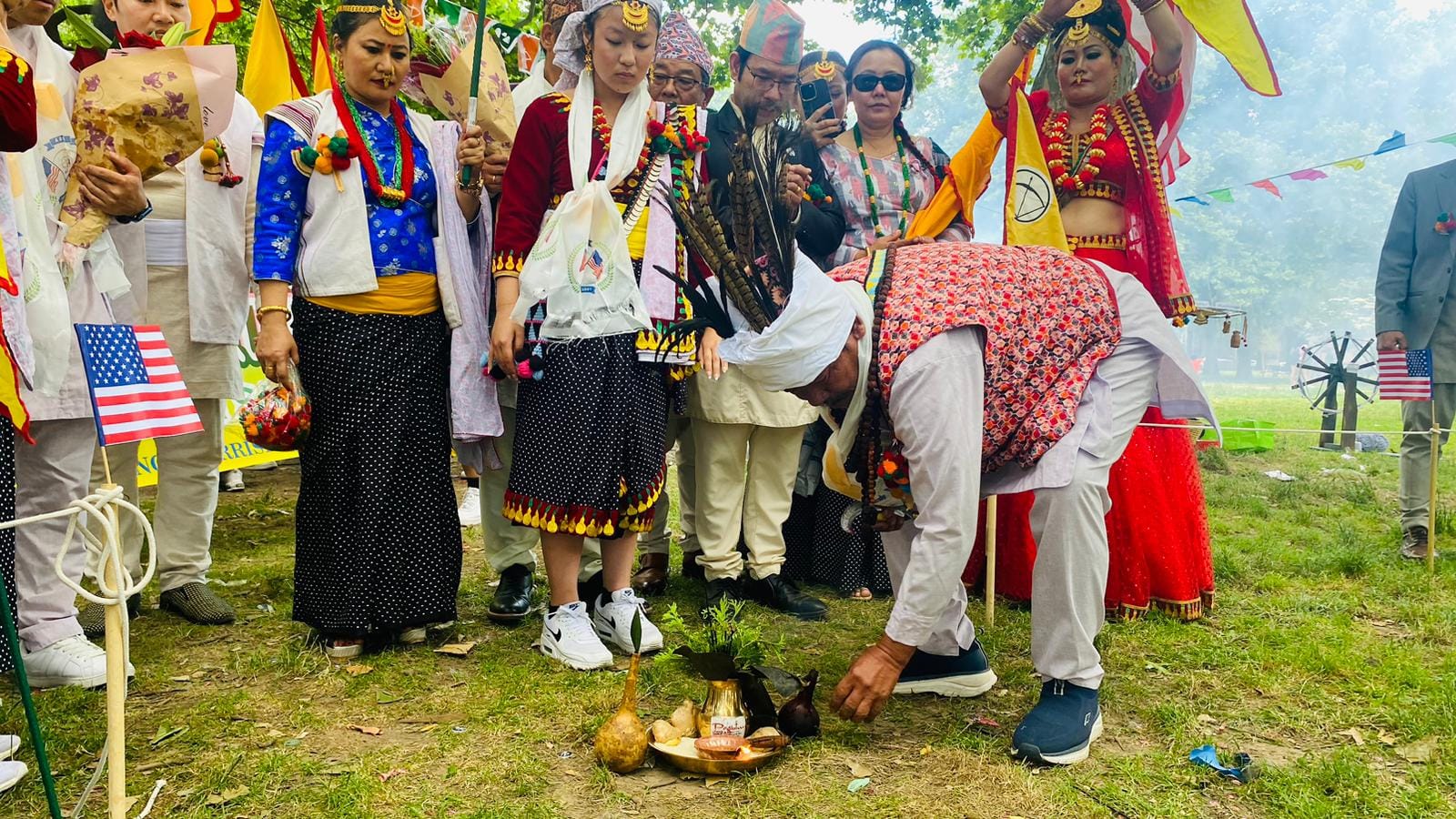
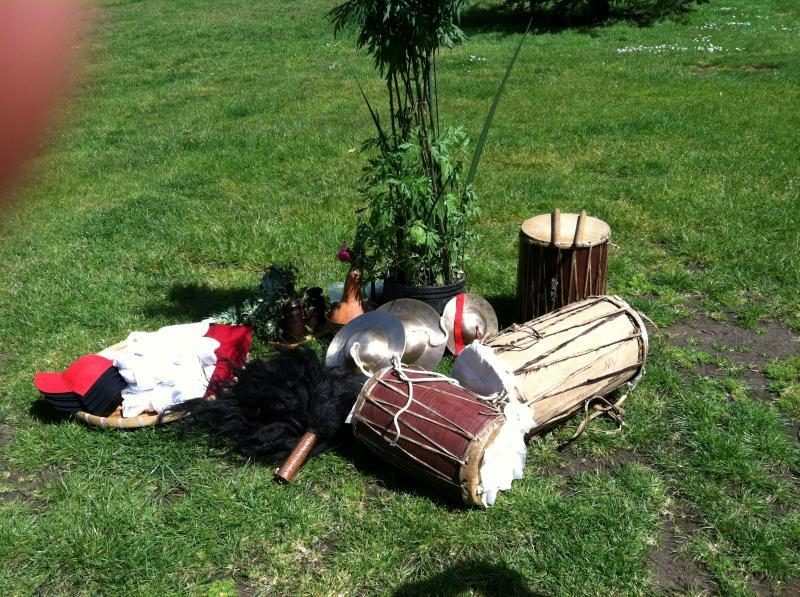
Although formal religious rituals were not conducted during the event, the collective Sakela Sili dance was performed for the first time, with the rhythm of drums (Dhol) and Jyamtya, laying the institutional foundation of Kirat Rai culture in America. This program established a strong basis for mutual acquaintance, cultural awareness, and collective unity.
Institutional Development and Unification Efforts:
Following this historic gathering, organizations such as the Kirat Rai Society of America (KRSA), Nepal Kirat Rai Association of America (NEKRA), and Kirat Rai Association of Northern California (KRANC) were established in different states. The shared objective of these organizations was to preserve the Kirat Rai language, religion, rituals, and culture in a foreign land.
KRSA (Kirat Rai Society of America): An ad hoc committee was formed in 2003 under the leadership of Dr. Kalyani Rai; registered as a 501(c)(3) organization in 2004.
NEKRA (Nepal Kirat Rai Association of America): Established in New York under the leadership of Durga Rai.
KRANC (Kirat Rai Association of Northern California): Established in California under the leadership of Tej Rai.
Through the collective efforts of these organizations, UKROA was established in 2007. However, during the unification process, some members preferred to remain within KRSA. At present, both organizations operate independently as 501(c)(3) institutions and maintain affiliations with the Kirat Rai Yayokkha in both the United States and Nepal.
Over time, extensive discussions, dialogues, and negotiations were conducted with the aim of uniting all organizations under a single common umbrella. As a result of these efforts, the United Kirat Rai Organization of America (UKROA) was formally established in 2007. Since its inception, the organization has upheld unity, inclusiveness, and cooperation among multilingual Kirat Rai communities as its core principles.
Organizational Expansion:
UKROA is registered as a 501(c)(3) non-profit organization under the laws of the United States of America. Over time, chapters have expanded across various states, and leadership has been selected through democratic electoral processes in accordance with the organization’s constitution.
The organization provides equal respect, inclusiveness, and opportunities for participation to the entire Kirat Rai community without discrimination based on language (Rai languages), nationality, or geographical differences.
Major Activities and Contributions:
UKROA has made significant contributions in the fields of language, culture, and humanitarian services. Major activities include:
- Organization of blood donation programs.
- Relief assistance to victims of natural disasters in Nepal (earthquakes, floods, landslides, COVID-19).
- Financial and moral support for the conservation projects of Salpa Silichung, Tayachung Jayajung, and Mukkumulung.
- Assistance in medical treatment, school construction, and hospital development.
- Construction and management of Sakela Than and Suptulung.
- Honoring distinguished individuals and organizing ritual cultural programs.
- Continuous operation of campaigns for the recognition and preservation of Mundumi spiritual practitioners, including Nakchhung, Nokchho, and Bijuwas.
- The Sakelathan established in Massachusetts has developed into a significant center for the preservation, practice, and intergenerational transmission of Kirat Rai religion and culture in the United States.
Conclusion and Current Challenges:
Although the Kirat Rai community is numerically small, it is culturally rich and historically distinguished. Due to migration, modern lifestyles, religious conversion, and external cultural influences, the preservation of language, rituals, and cultural identity among future generations has become increasingly challenging.
If the Kirat Rai community residing in the United States fails to unite under a single common platform, the long-term preservation of language, religion, and culture will become extremely difficult. Therefore, the historic responsibility of the present generation lies in ensuring the sustainable protection of Kirat language, rituals, and culture for future generations. Achieving this objective requires broad dialogue, cooperation, and a visionary roadmap.
Key Figures in the Establishment of UKROA:
Chuna Grace Rai Nelson – Chairperson, Ad Hoc Committee
Dr. Krishna K. Rai (K.K) – Founding Member
Milan Rai – Founding Member
Shiva Kumar Rai – Founding Member
Dhaula Bir Rai – Founding Member
Keshab Ram Rai – Founding Member
Tej Rai – Founding Member
Nanda Rai – Founding Member
Suresh Chamling Rai- Founding Member
Past Presidents of UKROA:
Chuna Grace Rai Nelson – Chairperson, Ad Hoc Committee (2007)
Shiva Kumar Rai – First Elected President (2007–2010)
Milan Rai – President (2010–2013)
Prabhakar Rai – President (2013–2016)
Bishnu Rai – President (2016–2019)
Muna Rai – President (2019–2022)
Jaya Rai – President (2022–2025)
Samita Rai – President (2025–Present)


